Insights
IoT SIM deployment handover: device, access and support checklist
A connectivity handover is complete when the next responsible team can identify each device, understand its SIM or eSIM state, access only the systems it is authorized to use and reproduce the agreed connectivity test. This checklist joins the supplied procurement SOP with NIST device-identity and logical-access questions. It does not claim that every CMP, API or device supports every control.
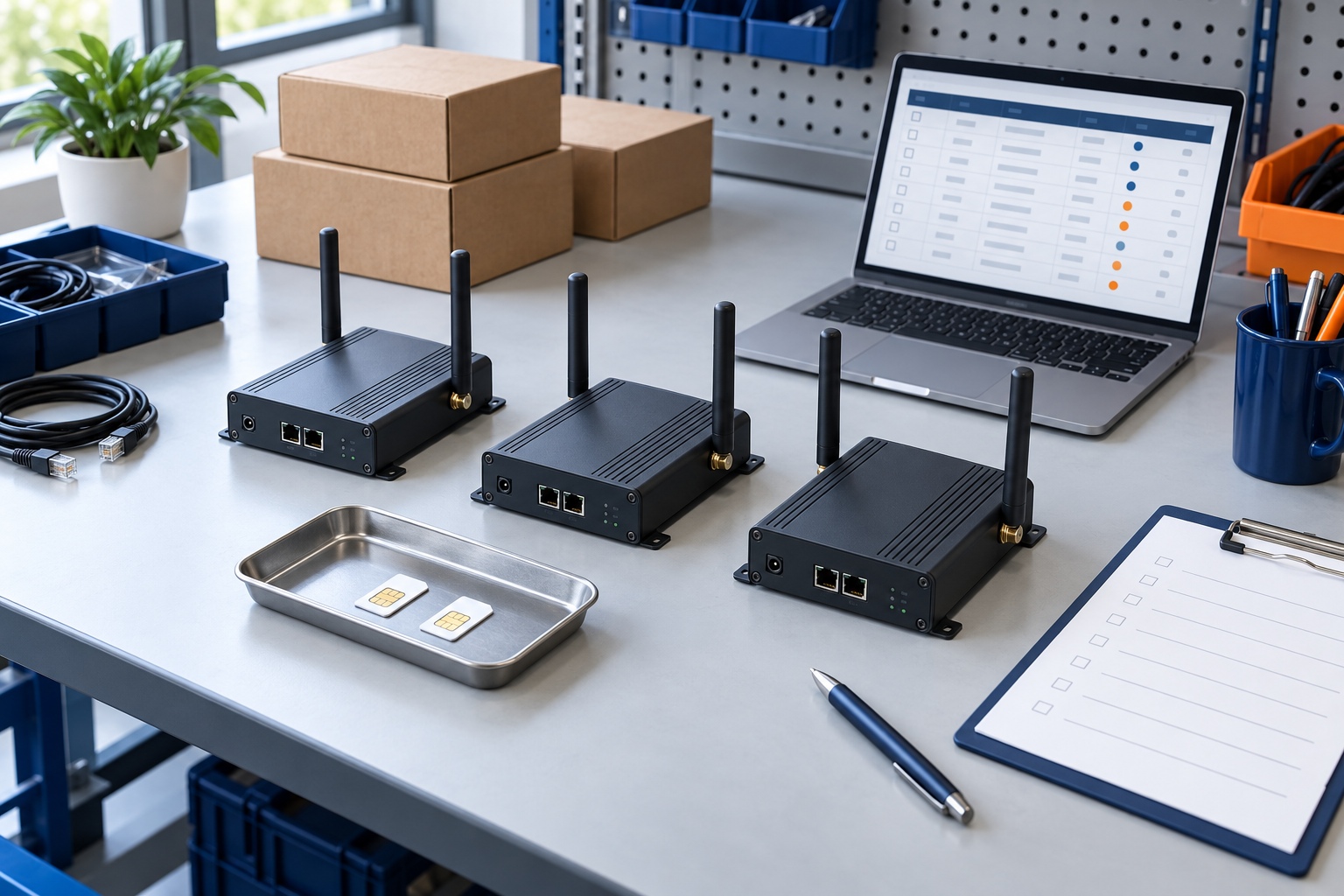
Create one identity record per device
Record the device model, hardware revision, modem or IMEI reference where appropriate, firmware, installation country, intended scenario and internal asset owner. Keep the SIM or eSIM identifier in the controlled system rather than distributing it through ordinary email. Link the record to the test result without publishing credentials or sensitive customer information.
NIST treats unique logical and physical identification as a capability area. For procurement, this means asking how the integrator will distinguish a replacement unit, a returned device and a production unit before activation or troubleshooting.
Make access ownership explicit
List who can change device configuration, manage the SIM or eSIM, view usage, operate the CMP if one is in scope, access an API and approve a replacement. Separate administrative, support, installer and read-only roles. Record the process for removing an installer or supplier account after handover. Do not promise role support or API access unless the proposed service confirms it.
NIST's logical-access catalog emphasizes authentication, revocation, role privileges, least privilege and control of external connections. Use those categories to expose gaps during the quote stage rather than discovering them after devices are in the field.
Prove the connection with a repeatable test
The supplied SOP starts with device, scenario, place and quantity, then checks network, bands, roaming, APN, eSIM and traffic requirements. Convert those questions into a test sheet: SIM state, registration, data session, DNS or endpoint reachability, application message, measured usage and recovery action. Repeat it on the intended country and hardware variant.
A successful registration is not the same as a usable data session, and a data session is not the same as an application result. Keep these outcomes separate so a support team can locate the failing layer without replacing a SIM unnecessarily.
Close the delivery and support loop
Handover should include the agreed plan or quote reference, quantities, activation state, installation notes, test evidence, open issues, support channel and renewal or change process. For eSIM projects, confirm which party owns profile operations and which device workflow is supported; do not assume that the word eSIM specifies one universal process.
Ask what information support needs for APN, firmware, coverage or replacement investigation. Quanqiu IoT can discuss the connectivity and project information required for an inquiry. Any availability commitment, response target, return condition or platform feature must be confirmed in the applicable commercial arrangement.
Frequently asked questions
Should the SIM number be included in the public handover document?
No. Keep sensitive identifiers and credentials in the controlled system and share only the minimum required with authorized support or deployment personnel.
Is network registration proof that the device is ready?
No. Validate registration, data session, endpoint reachability, application behavior and recovery separately on the intended hardware and country.
Does eSIM automatically mean remote profile management is available?
No. Confirm the device, eUICC, profile and management workflow with the proposed parties. The term eSIM alone does not define the commercial or technical scope.
Official references
Related reading
Send your device list, countries, quantities and handover requirements to Quanqiu IoT for a scoped connectivity discussion.
Discuss your project