Insights
MQTT over an IoT SIM: plan offline recovery before rollout
An IoT SIM can restore a device's cellular path, but it does not by itself recover MQTT sessions or decide which offline messages matter. Before rollout, define the device reconnect behavior, broker session policy, message priority, expiry and application reconciliation. This guide gives procurement teams a practical review sequence without claiming a Quanqiu IoT MQTT service or guaranteed delivery.
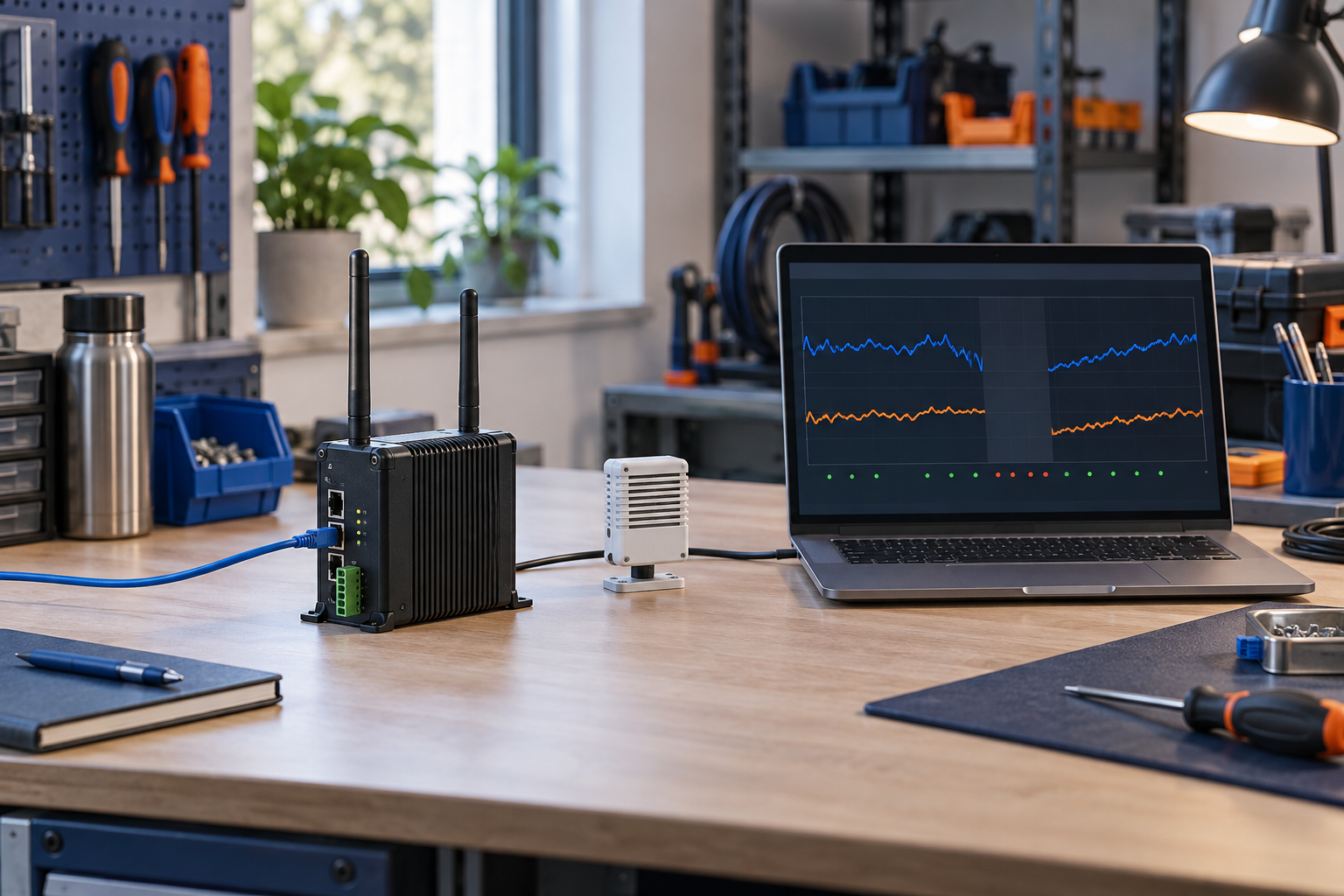
Separate the three recovery layers
When a cellular link disappears, three different events may follow: the modem registers again, the IP connection becomes usable, and the MQTT client reconnects to its broker. The application may still need to resubscribe, reconcile state or decide whether queued commands remain valid. Treat these as separate acceptance items. A CMP or SIM usage view can help investigate connectivity records, but it cannot prove that the device application processed a message.
OASIS defines MQTT session behavior, while AWS documents platform-specific persistent-session behavior. Use those references to ask the software owner precise questions, not to infer that every broker stores every message.
Choose message behavior by business consequence
A periodic temperature reading may be superseded by a newer reading, while a configuration command may require an acknowledgement, expiry and audit record. Define QoS, retained-state and expiry choices with the application team. Do not treat QoS as a substitute for end-to-end business confirmation: a broker acknowledgement is not the same as the device applying a command.
Ask what happens when a command is duplicated, arrives late or is no longer safe. This is especially important for meters, industrial controllers and payment-adjacent devices. Record the answer in the device acceptance matrix before selecting the SIM allowance or declaring the deployment ready.
Make security and ownership part of connectivity procurement
NIST's IoT catalog places identity, authorized access, data protection, updates and security-state reporting alongside connectivity. During handover, record the device identifier, SIM or eSIM reference, broker identity, certificate or credential owner, firmware version and who can revoke access. Never place credentials or full identifiers in a public test report.
Confirm whether the proposed hardware supports the required authentication and update controls. Quanqiu IoT can discuss the country, device, SIM/eSIM and project requirements; broker configuration, firmware behavior and security controls remain the responsibility of the appropriate device and platform owners.
Use a pilot matrix before buying in volume
Test clean startup, loss during idle time, loss during an uplink, loss during a downlink command, broker restart and expired queued messages. Record reconnection time as an observation, not a promised SLA, and include the country, band, APN, firmware and network conditions. Repeat the cases on the intended hardware variant.
Move to a project quote when several countries, device classes, eSIM provisioning, CMP visibility or API coordination are involved. Send the pilot matrix with quantities and operating period so the proposed Global IoT SIM arrangement can be reviewed against actual requirements.
Frequently asked questions
Does an IoT SIM guarantee MQTT message delivery?
No. It provides a connectivity component. Delivery, session persistence, message expiry and application processing depend on the device, broker and application design.
Should every MQTT message use QoS 1 or 2?
No universal setting is appropriate. Choose by business consequence, duplicate tolerance, expiry and broker support, then test the actual device and application.
What should be included in an MQTT connectivity inquiry?
Provide countries, device and modem models, protocol version, reporting interval, offline behavior, data estimate, APN/eSIM needs and the required pilot cases.
Official references
Related reading
Share your device, country and offline-recovery requirements with Quanqiu IoT to discuss a scoped Global IoT SIM or eSIM project.
Discuss your project